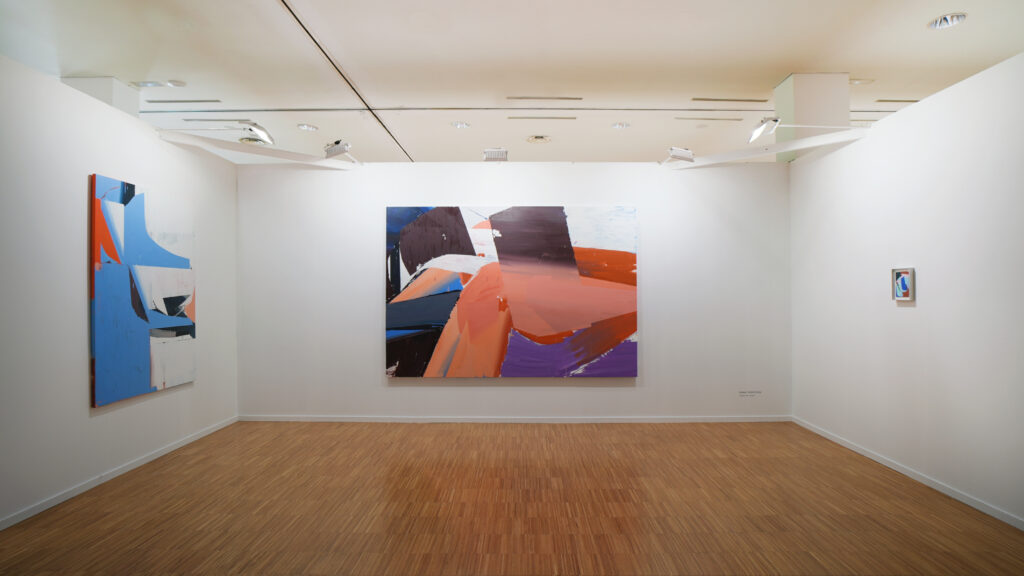
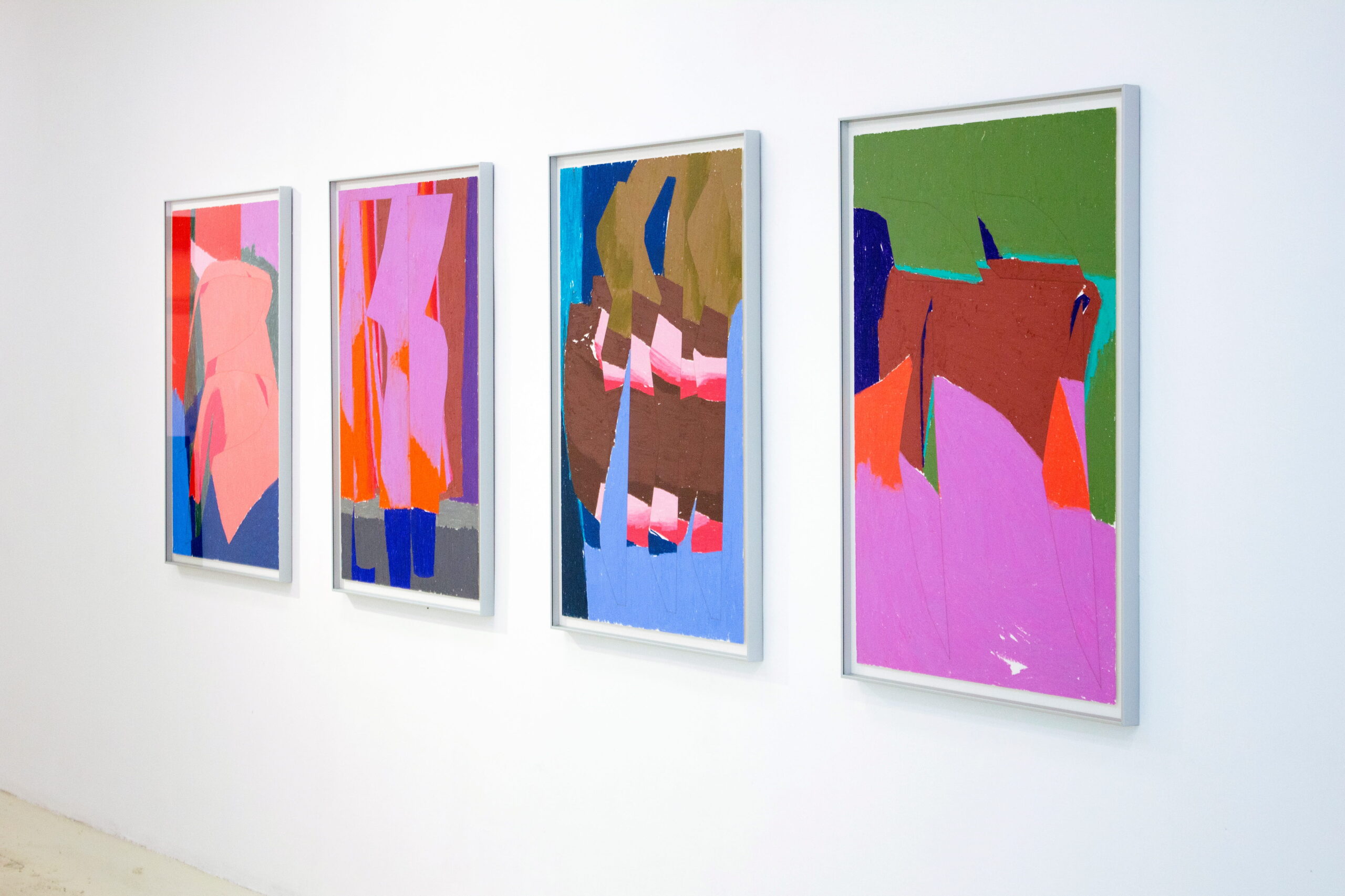
SC Gallery presents the project “Bailar las comas” (Dancing the Commas) by artist Amaya Suberviola, the recent winner of the BMW Painting Prize, at Arte Santander 2026.
Conceived specifically for the fair, the project further explores the process-based nature of Suberviola’s painting practice.
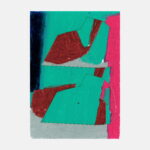
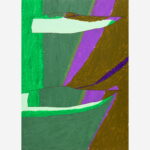
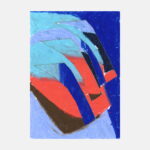
Bailar las comas.
(Dancing the Commas)
When people ask me to explain my work, I usually talk about methodology or about the possible relationships between my practice and other systems. This time, I simply want to share some very basic sensations about painting and the way I relate to it. The following text is a collection of unordered thoughts—notes I wrote after a day in the studio. Some of these ideas are always with me; others were intruders that happened to slip in that day.
I don’t imagine something and then paint it. I don’t know how to design and execute. What I know is how to move closer to things, circle around them, court them. I like what begins as one thing and becomes another. Something that was, something that will be. What you find while looking for something else. All the actions you take in the process of becoming something. Painting with questions and possible answers, problems and possible solutions. A painting seems to be heading somewhere that doesn’t quite make sense, but sometimes it briefly appears to make sense, and those small moments are the discovery. They feel like what I imagine clipping a carabiner into an anchor point must feel like when climbing. I’ve never climbed. Setting up situations that are capable of surprising me, as though I hadn’t created the conditions for them to happen. As though the painting were answering back. Sometimes it seems to answer. Vibrations between two colours that meet almost by chance and attract me, like two strangers crossing paths and feeling drawn to one another. Two forms that seem to be dancing to the same song. Or two forms at odds with each other. Saying I love you in French and I hate you in German somehow feels more appropriate. Creating accidents that look like accidents—like the mafia, one of my teachers once told me. Playing dumb without anyone noticing, or pretending for so long that some of it starts to stick and feels genuine. “Lying,” a friend once told me. I prefer lying without knowing you’re lying, because then you believe it’s true.
My work begins with a sustained attention to how images are constructed. Beyond what an image represents, I am interested in observing the operations that allow it to come into being: displacements, substitutions, corrections, concealments, and accumulations. I understand painting as a space where these actions can become visible, and where every decision leaves an active trace within the work.
Over the past few years, I have used digital image-editing tools such as Photoshop as a point of reference. I am interested in the way these environments transform an image through sequences of simple operations that continually alter its state. Yet there is a gap between the logic of these systems and the material experience of painting. In digital environments, transformations are absorbed into the final result, hidden beneath a stable surface.
My recent research has turned towards models in which these transformations remain visible. I am interested in the possibility that a painting might preserve evidence of its own changes, incorporating different moments and states within the same surface. I do not see these traces as residues of the process, but as elements that actively participate in the construction of the work itself.
SC Gallery participates in Arte Santander 2026 with the support of the Provincial Council of Bizkaia.
